








AI & Emerging Tech
Malaysia expands TVET focus on high-tech talent, AI, semiconductors and green jobs






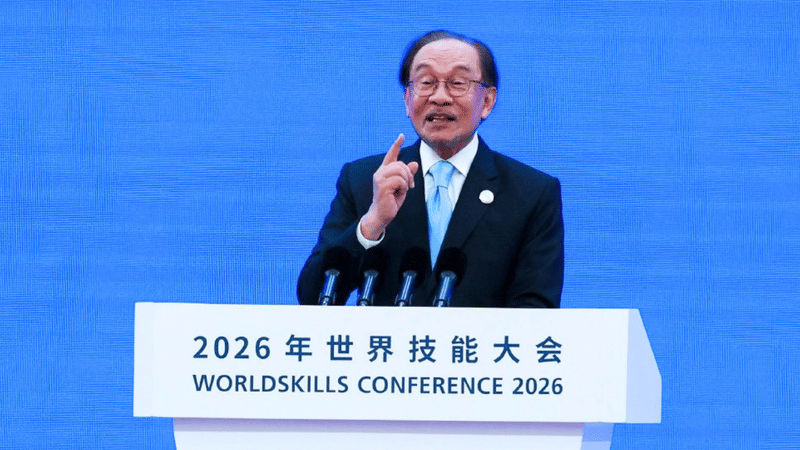
Anwar said Malaysia’s National Semiconductor Strategy includes a target to attract RM500 billion in semiconductor investment and train or upskill 60,000 highly skilled engineers by 2030.
Malaysia is strengthening Technical and Vocational Education and Training (TVET) as a key part of its industrial policy, with the government seeking to build a skilled workforce for high-growth sectors including semiconductors, artificial intelligence (AI), renewable energy and electric vehicles (EVs).
Prime Minister Datuk Seri Anwar Ibrahim said the country’s TVET system must evolve alongside its economic transformation as Malaysia moves beyond traditional chip assembly and testing towards higher-value activities such as semiconductor design.
“The need for skilled workers is becoming increasingly urgent as Malaysia moves from relying on chip assembly and testing towards higher-value activities, including semiconductor design,” Anwar said in his keynote address at the WorldSkills Conference 2026 in Shanghai.
He said TVET graduates would need to do more than operate new technologies, adding that they must be able to apply their training to increasingly complex industrial environments.
TVET 2.0 to strengthen industry links
Malaysia’s next phase of reform, known as TVET 2.0, will focus on closer collaboration between training institutions and industry to ensure curricula and skills development keep pace with changing technology and job requirements.
“Companies know what equipment they use and how quickly their needs change. They should be partners in shaping talent from the outset and ensure they are ahead of the curve,” Anwar said.
He noted that technological change is happening faster than education systems can rewrite curricula, making closer industry involvement important for keeping training relevant.
Under TVET 2.0, existing institutions will also be encouraged to expand into areas including AI, semiconductors and renewable energy.
Malaysia currently has around 1,400 TVET institutions involving 12 ministries, state governments and private providers, coordinated through the National TVET Council. The National TVET Policy 2030 provides the broader direction for developing a highly skilled workforce with better incomes.
60,000 engineers targeted by 2030
Anwar said Malaysia’s National Semiconductor Strategy includes a target to attract RM500 billion in semiconductor investment and train or upskill 60,000 highly skilled engineers by 2030.
The push reflects the country’s broader ambition to move towards higher-value industrial activities and strengthen its talent pipeline for technology-intensive sectors.
“A modern economy cannot function without the technicians who keep a semiconductor line running or an electric vehicle plant on schedule. The machinery may become more sophisticated. The software may become more intelligent. But somebody still has to understand how it works and know what to do when it does not,” he said.
Malaysia seeks deeper TVET cooperation with China
Anwar also highlighted opportunities to expand Malaysia-China cooperation on skills development, particularly in advanced manufacturing, AI, robotics, industrial automation, EVs, semiconductors and digital technologies.
Potential areas of cooperation include student and trainer exchanges, joint training programmes, closer links between TVET institutions and industry, and greater sharing of technology and expertise.
Anwar pointed to the Malaysia-China Youth TVET Training Initiative as an example of existing collaboration and said TVET could become a pillar of broader bilateral relations.
China’s Premier Li Qiang, who officially opened the three-day WorldSkills Conference 2026, also outlined China’s experience in skills development and efforts to strengthen talent development in response to changing economic and industrial needs.
The conference, held alongside the WorldSkills Competition Shanghai 2026 and WorldSkills Expo, brought together policymakers, educators and industry leaders to discuss the future of skills development.
Malaysia has participated in the WorldSkills competition since 1993 and sent 22 participants across 21 skill areas this year.
Author
Loading...