








AI & Emerging Tech
No AI, no promotion: Accenture CEO sets new rule for career growth





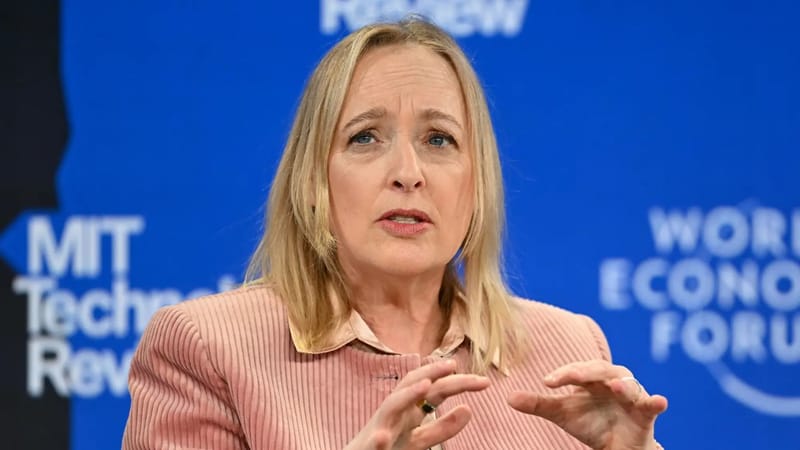
Accenture chief Julie Sweet says employees must use AI in their work if they want to move up, as tech companies increasingly link career growth to AI skills.
Accenture employees hoping for a promotion will need to demonstrate how they use artificial intelligence in their work, as the consulting giant moves to embed AI into its performance evaluation system.
Chief executive Julie Sweet said the company now treats AI use as a core part of how work is done, making it a factor in career advancement.
“Today, AI at Accenture is how we do work,” Sweet said on the Rapid Response podcast, according to Business Insider. “So if you want to get promoted, you’ve got to do the things that we do in order to operate at Accenture.”
The remarks underline Accenture’s broader shift toward becoming an “AI-first” company, with leadership encouraging employees to adopt the technology across projects and client work.
Sweet rejected criticism that monitoring AI usage among employees amounts to coercion. Instead, she compared the change to the widespread adoption of computers in offices decades ago.
“These are the new tools to operate a company,” she said, according to Business Insider.
AI embedded in performance evaluation
Accenture has increasingly integrated AI capabilities into its operations and workforce strategy. The company is encouraging staff not only to use AI tools but also to develop a deeper understanding of how the technology works.
Sweet said leaders must understand the strengths and limitations of AI in order to transform how consulting services are delivered.
After the launch of ChatGPT in late 2022, Accenture’s top 50 executives received intensive training in artificial intelligence, she said, so they could better grasp its potential and guide the company’s strategy.
“I knew that if they didn’t understand the power, they would not be able to help us transform how we deliver services,” Sweet said.
The company has since accelerated its investments in AI. According to Business Insider, Accenture partnered with ChatGPT last December, expanded its collaboration with AI start-up Anthropic shortly afterwards and launched a new division focused on artificial intelligence services known as “reinvention services”.
Accenture has also cut roles among employees it cannot retrain in AI-related capabilities, reflecting a broader restructuring of its workforce to align with the new strategy.
A wider shift across the tech industry
The link between AI fluency and career progression is emerging across the technology sector.
Cisco reported earlier this year that employees recommended for promotion used AI tools about 50% more frequently than those who were not, according to a company study released in January.
Similarly, Amazon has begun incorporating AI usage into promotion documentation in some divisions. Business Insider reported that employees applying for promotion in certain teams must explain how they integrate AI into their daily work.
Jamie Siminoff, founder of Ring who returned to Amazon in 2025 to oversee several business units, told Business Insider that AI use would increasingly shape career advancement.
“We’re going to promote based on AI,” Siminoff said in an interview last October. “We’re going to promote based on how you’re integrating AI into your job.”
AI skills becoming a workplace expectation
The developments highlight how artificial intelligence is rapidly becoming a baseline skill across corporate roles, particularly in technology and consulting firms.
Companies are investing heavily in generative AI systems to improve productivity and create new services for clients. As a result, employees are under growing pressure to develop AI literacy and integrate it into everyday tasks.
For Accenture, the shift represents a strategic bet that widespread AI adoption will reshape the consulting industry.
Sweet has framed the transformation as essential to maintaining competitiveness as clients increasingly demand AI-driven solutions.
The approach signals a broader change in how companies evaluate talent. As artificial intelligence becomes embedded in workflows, career advancement may increasingly depend on how effectively employees can work alongside these tools.
Topics
Author
Loading...
Loading...