








AI & Emerging Tech
Singapore workers grapple with cost pressures, job insecurity and AI anxiety, NTUC survey finds







Workers cite economic downturns, business closures and skills obsolescence as top job threats, with contract workers emerging as the most vulnerable group.
Rising living costs, persistent wage stagnation and growing concerns over job security are weighing heavily on workers in Singapore, according to the latest Survey on Economic Sentiments (SES) released by the National Trades Union Congress (NTUC).
Based on responses from 4,000 workers collected across two waves in 2025, the report paints a nuanced picture of a workforce navigating economic uncertainty while bracing for structural shifts driven by technology and demographic change.
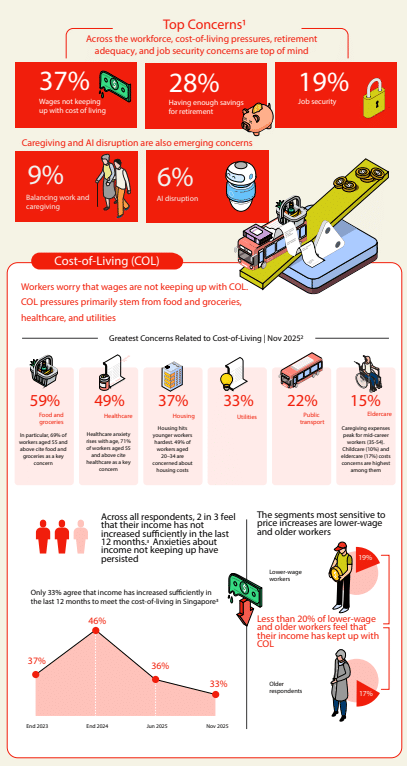
According to the report, the cost of living is the most pressing concern for workers. Nearly two in three respondents said their income had not increased sufficiently over the past year, with only 33% feeling their wages had kept pace. Essential expenses, particularly food, healthcare and utilities, continue to drive financial stress, with older and lower-wage workers feeling the sharpest impact.
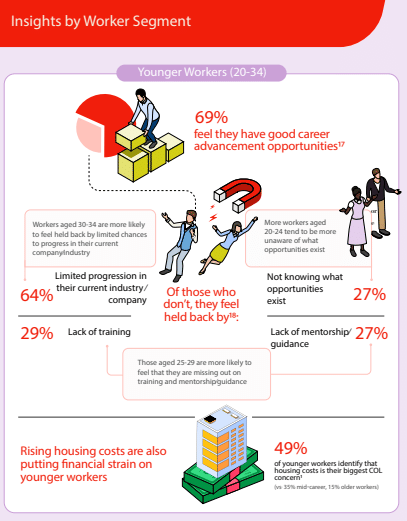
“Cost pressures are not just persistent, they are intensifying across different segments of the workforce,” the report noted. Healthcare costs are a major concern for 71% of workers aged 55 and above, while housing affordability is hitting younger workers hardest, with nearly half of those aged 20 to 34 flagging it as a key issue.
Beyond daily expenses, longer-term financial security is also under strain. More than a quarter of respondents expressed concern about having enough savings for retirement, underscoring anxieties about financial adequacy in later life.
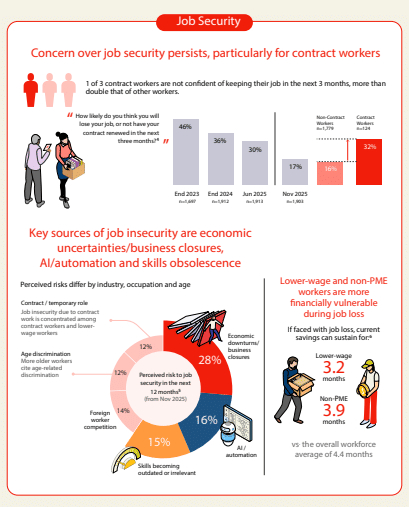
Job security remains another critical pressure point. Workers cited economic downturns, business closures, and the risk of skills becoming obsolete as leading threats. Contract workers, in particular, appear vulnerable, with one in three expressing low confidence about retaining their jobs in the near term, more than double the rate among non-contract workers.
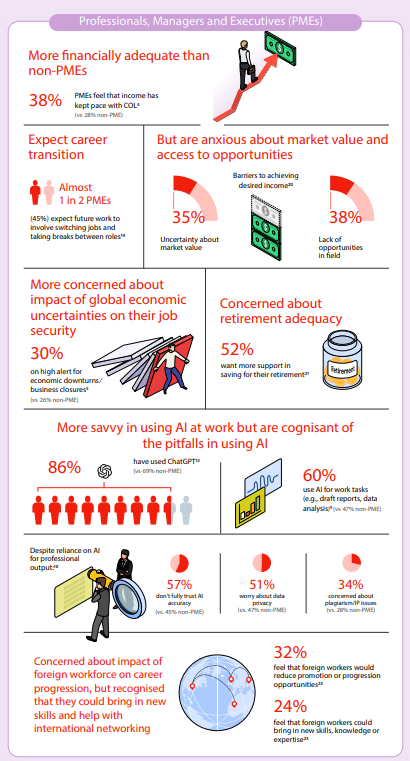
At the same time, artificial intelligence is emerging as both an opportunity and a source of unease. While only 6% of respondents identified AI disruption as their top concern, the sentiment is more pronounced among younger workers and professionals. Nearly one in three younger workers worry that AI could replace their current roles, even as many actively use AI tools at work.
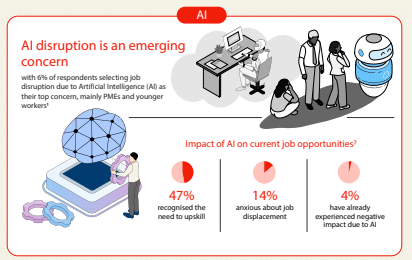
The survey highlights a growing divide in AI readiness.
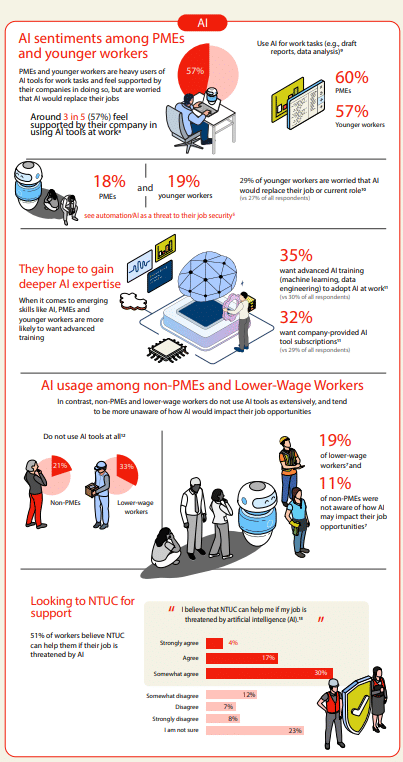
Professionals, managers and executives (PMEs) are more likely to use AI tools and seek advanced training, while lower-wage and non-PME workers lag behind in both adoption and awareness, raising concerns about widening inequalities in the future workforce.
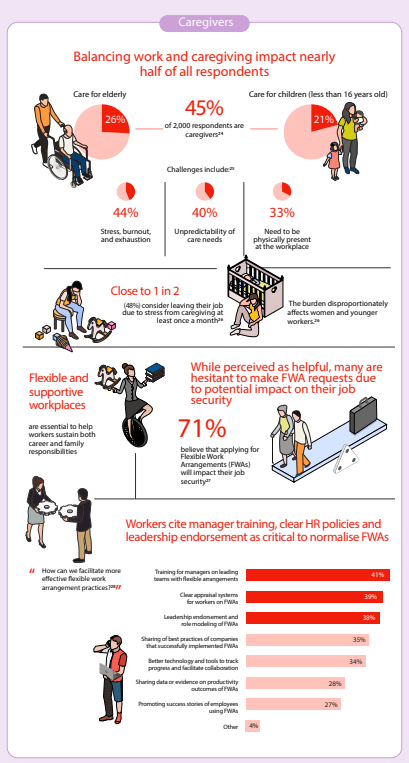
Caregiving responsibilities are adding another layer of complexity. Close to half of respondents reported challenges in balancing work and caregiving, with stress, burnout and unpredictable care needs frequently cited. Despite recognising the value of flexible work arrangements, many workers remain hesitant to request them due to fears of negative career impact.
Among younger workers, financial strain is compounded by limited visibility into career pathways and concerns over progression opportunities.
Meanwhile, older workers are increasingly open to extending their working lives, with 71% indicating a willingness to work beyond retirement age, provided there is adequate flexibility and support.
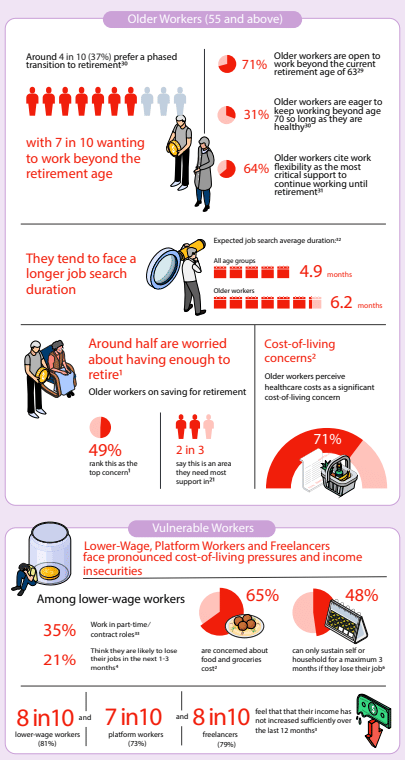
Vulnerable segments, including lower-wage workers, freelancers and platform workers, face the most acute pressures. Many report being able to sustain themselves for only a few months in the event of job loss, highlighting the fragility of financial resilience within these groups.
Despite these challenges, workers continue to look to NTUC for support, particularly in job placement, career guidance and training. The report notes that workers are most motivated to upskill when training is directly applicable to their jobs and linked to higher earning potential.
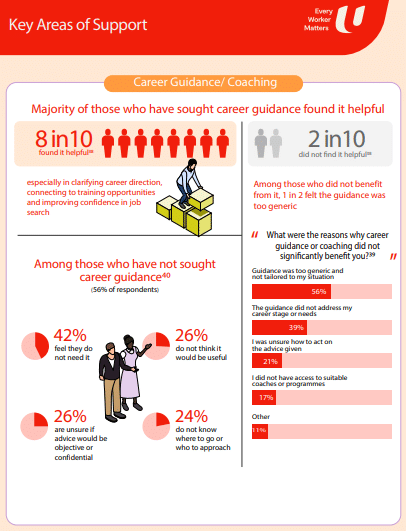
The findings underscore the evolving role of the labour movement in Singapore’s economic transition. NTUC said it will continue to advocate for stronger worker protections, enhanced career support and more inclusive workplace practices, particularly for those most vulnerable to disruption.
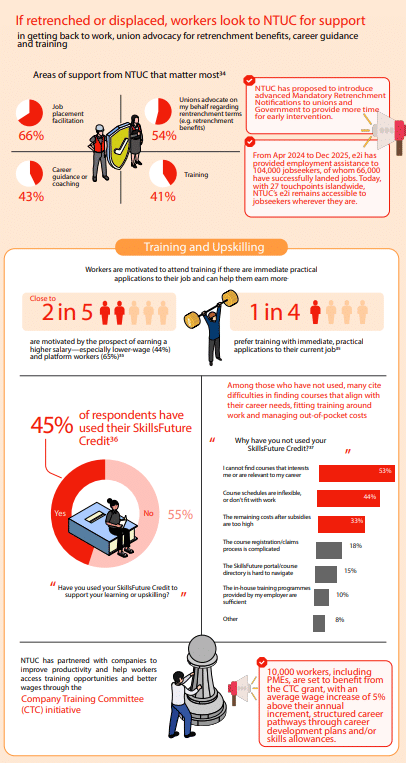
As Singapore pushes ahead with economic transformation, the report concludes, ensuring that growth remains inclusive and that “no worker is left behind” will be critical to sustaining both social and economic resilience.
Topics
Author
Loading...
Loading...