








Economy Policy
Inside Singapore: How businesses are responding to Trump-era tariffs



 ||
||

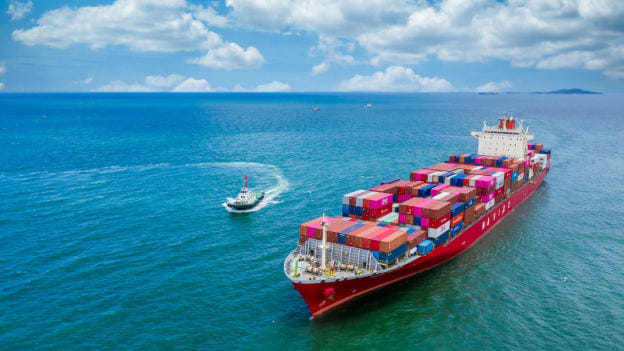
Businesses in the city-state are diversifying, innovating, and adapting to weather an uncertain global trade climate.
When the Trump administration unveiled a sweeping 10% tariff on all imports, including those from long-standing partners like Singapore, it wasn’t just an economic jolt – it sent geopolitical tremors across the global trade system.
For Singapore, a city-state whose prosperity is intricately tied to open markets and seamless supply chains, the move was more than a policy shift; it was a stress test for its economic model.
With its strategic location and role as a transshipment hub, Singapore has long been a cornerstone of Asia’s trade architecture. But as protectionism returns with a vengeance, the city-state is being forced to recalibrate. The imposition of tariffs – notably those targeting trade with China and other large economies – has strained Singapore’s export engines, disrupted supply chains, and cast a shadow over its outlook as a financial and logistics centre.
Disruption across industries
The universal 10% US import tariff has hit Singapore where it hurts: its export-reliant sectors. Industries such as manufacturing, electronics, machinery, and chemicals have seen increased costs and shaken demand. The trade and logistics sectors, key arteries of Singapore’s economy, are feeling the squeeze from rerouted goods and weakened global flows.
The manufacturing industry, in particular, is feeling the pinch. Highly integrated with global value chains, it’s not just local exporters that are at risk. Multinational corporations with production bases in Singapore are rethinking their strategies, contemplating whether to absorb the additional costs, pass them onto consumers, or shift production closer to the US.
Precision engineering and offshore equipment sub-sectors are especially vulnerable, as are the wholesale trade and financial services sectors, which rely heavily on predictable trade volumes and investor confidence.

Capital jitters and market reactions
Beyond the physical movement of goods, there’s also financial turbulence. Heightened geopolitical risks have made international investors skittish, triggering capital flight, equity sell-offs, and foreign exchange volatility. For businesses, that means costlier financing and tougher decisions about regional investment.
This volatility is putting Singapore’s status as a global financial hub under pressure. With the global economy increasingly operating in uncharted waters, businesses in Singapore are not only watching the numbers but preparing for potential job cuts and slower growth.
A coordinated national response
Recognising the scale and immediacy of the challenge, the Singaporean government has taken decisive steps. A national task force, chaired by Deputy Prime Minister Gan Kim Yong, has been established to guide the country’s response. Comprised of economic agencies, employer federations, and unions, the task force is tasked with addressing both the short-term shocks and long-term shifts in global trade.
In tandem, Budget 2025 rolled out targeted measures to help companies weather the storm. Financial aid, advisory services, and cash flow support, particularly for SMEs, are part of the government’s safety net. More assistance could be on the cards if conditions deteriorate further.
This isn’t a ‘wait and see’ approach. It’s a full-court press to ensure that Singapore remains adaptable, competitive, and open for business.

Business strategies: Adapt, diversify, survive
Across the board, companies are recalibrating their strategies. Supply chain diversification has become a buzzword – less a luxury and more a necessity. Firms are mapping out trade flows, reassessing dependencies, and sourcing components from regional or local suppliers. Although the universal nature of the tariffs limits room to manoeuvre, businesses are getting creative.
Multinationals are weighing production shifts, potentially scaling down export-driven manufacturing in Singapore in favour of localised production in North America.
Innovation is also on the rise. Firms are investing in automation, redesigning products to use fewer imported parts, and turning to systems that enhance agility. This digital push isn’t just about survival but positioning businesses to thrive in a world where uncertainty is the new normal.
Meanwhile, market diversification is gaining steam. Companies are turning their attention to Southeast Asia, China, and the Middle East to hedge against reliance on the US market. This pivot is more than symbolic; it’s a structural shift aimed at long-term resilience.
Collective foresight and collaboration
Faced with these headwinds, the business community isn’t going it alone. Industry groups are rallying, forming consortiums to exchange insights, co-develop mitigation strategies, and engage policymakers. Scenario planning has become a core business function, with companies preparing for multiple outcomes in a rapidly changing global environment.
This spirit of collective resilience is echoed by the government’s efforts to foster closer public-private collaboration. Sense-making and open communication channels have been a hallmark of the task force’s approach, helping companies interpret fast-moving developments and plug into support schemes quickly.
A sobering forecast, but not defeatist
There’s no sugar-coating the challenge ahead. The government has signalled a likely downward revision in growth projections, with job creation slowing and retrenchments potentially rising if companies pull operations or scale back investment.
Prime Minister Lawrence Wong minced no words in his assessment of the situation:
We are entering a new phase in global affairs ... more arbitrary, protectionist and dangerous.”
Still, Singapore’s strength lies in its capacity to turn adversity into opportunity. With a robust institutional framework, world-class infrastructure, and a nimble business environment, the nation is better placed than many to withstand trade shocks.
Resilience in the face of volatility
Trump-era tariffs have thrown a spanner in the works of global commerce, but Singapore’s response has been swift, strategic, and steady. From the formation of a national task force to the recalibration of supply chains and markets, the city-state is marshalling its resources to adapt – not merely to survive, but to emerge more resilient.
Singapore’s overall strategy includes diversification, innovation, financial prudence, and human capital development. With support from the government and strong collaboration across sectors, businesses are forging a new chapter defined not by victimhood but by vigour.
If the global trade winds are shifting, Singapore is adjusting its sails – not retreating from the storm, but navigating through it with purpose.
Author
Loading...
Loading...