








Economy Policy
Singapore moves to unify skills and jobs ecosystem with new workforce agency






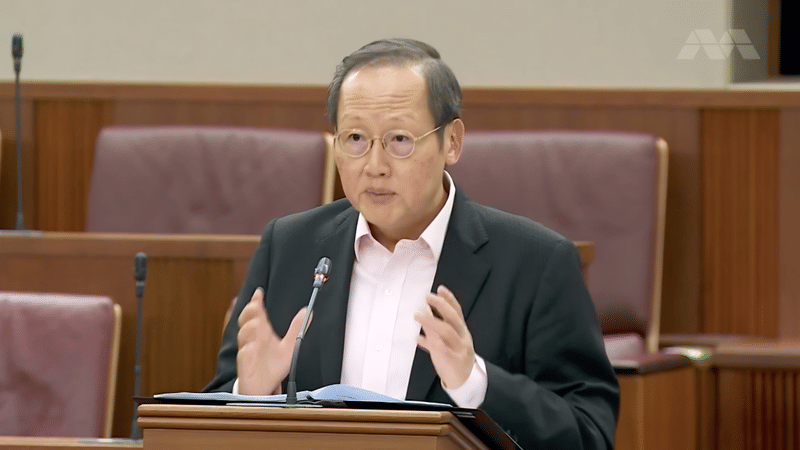
Tan highlighted ongoing initiatives such as sectoral job transformation mapping in financial services, which examines the impact of generative AI on roles and identifies new job opportunities, including in AI governance.
Singapore is set to overhaul its workforce and skills development architecture, with Minister for Manpower Tan See Leng announcing legislation to merge two key agencies into a single entity aimed at future-proofing workers and businesses amid rapid global change.
Speaking during the Second Reading of the Skills and Workforce Development Agency (SWDA) Bill, Tan outlined plans to combine SkillsFuture Singapore (SSG) and Workforce Singapore (WSG) into a new statutory board jointly overseen by the Ministry of Education and Ministry of Manpower.
The proposed Skills and Workforce Development Agency (SWDA), expected to be operational by the third quarter of 2026, will serve as a unified platform for skills training, career guidance and job matching.
A decade of progress, a new set of challenges
The move comes a decade after Singapore split its workforce development functions between SSG and WSG to sharpen focus on training and employment support respectively. Since then, participation in SSG-supported training has risen from 418,000 in 2016 to over 600,000 in 2025, while the number of individuals assisted by WSG has nearly tripled to 355,000.
However, Tan stressed that structural shifts, from the rise of artificial intelligence to geopolitical tensions and rapid ageing, have fundamentally altered the labour market landscape.
“ChatGPT did not exist five years ago. The capabilities of artificial intelligence we see today would have been science fiction in 2016,” he noted, underscoring the accelerating pace of technological disruption.
At the same time, Singapore has entered what Tan described as a “super-aged society,” with more than one in five citizens now aged 65 and above, a figure projected to rise to one in four by 2030.
A single engine for careers and skills
The new agency is designed to integrate skills development with employment facilitation, creating what Tan called an “upgraded engine” to better anticipate and respond to workforce shifts.
For individuals, SWDA will provide a single access point for career services, training programmes and job matching, replacing the need to navigate multiple agencies. The platform will incorporate AI-powered tools, including personalised career guidance and recommendations for in-demand skills.
Special focus will be placed on different workforce segments, from fresh graduates seeking industry exposure to mid-career workers navigating reskilling, and senior employees pursuing longer, multi-stage careers.
The government also plans to expand access to AI tools for workers undergoing selected training programmes, as part of broader efforts to prepare the workforce for an AI-driven economy.
Stronger support for employers
For businesses, SWDA aims to streamline hiring and workforce transformation. By integrating labour market data with skills intelligence, the agency will support skills-based hiring, internal mobility and job redesign.
Employers will also gain access to consolidated workforce transformation schemes through a single digital portal, alongside expanded grants to support reskilling and organisational change.
Tan highlighted ongoing initiatives such as sectoral job transformation mapping in financial services, which examines the impact of generative AI on roles and identifies new job opportunities, including in AI governance.
Building a broader ecosystem
Beyond individuals and employers, SWDA will work to strengthen Singapore’s wider ecosystem of career and training providers, including recruitment firms, HR consultancies and job platforms.
The agency will collaborate with industry partners to raise standards, improve access and pilot new service models—particularly for underserved groups such as returning workers and fresh graduates.
Driving a cultural shift
At its core, the reform seeks to embed lifelong learning and “career health” as societal norms. Tan called for a shift from reactive responses to disruption toward proactive, continuous upskilling by both workers and employers.
“In an era where AI is transforming job requirements at a pace that no single institution can fully anticipate, lifelong learning must become the norm,” he said.
Legislative framework and transition
The SWDA Bill outlines the agency’s governance structure, powers and responsibilities, while providing for the transfer of employees from SSG and WSG under no less favourable terms.
It will also repeal the existing legislation governing both agencies and introduce regulatory powers over career and training service providers.
If passed, the legislation will mark Singapore’s latest institutional reform aimed at aligning its workforce strategy with a rapidly evolving global economy, positioning SWDA as a central pillar in the country’s next phase of economic and human capital development.
Topics
Author
Loading...
Loading...