








Economy Policy
Thailand’s labour market softens in Q3 as severe flooding hits farm employment





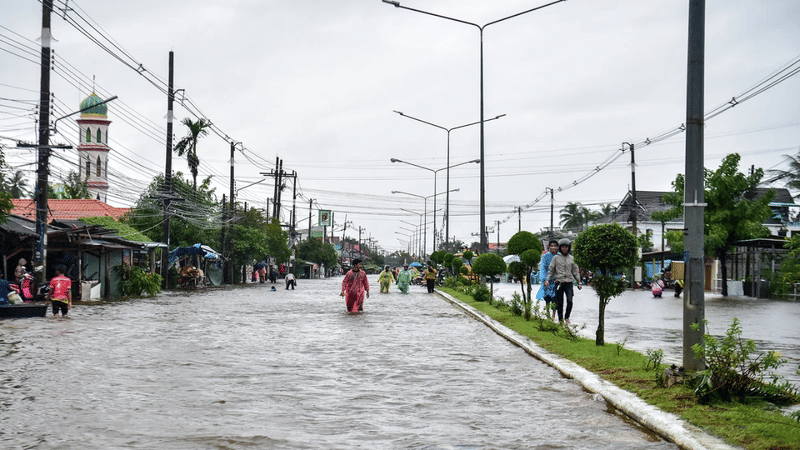
New NESDC data shows a dip in overall labour participation, with agriculture taking the biggest hit during months of heavy flooding.
Thailand’s labour market slowed slightly in the July–September quarter of 2025, with fresh government data pointing to a modest dip in overall employment. Officials say months of heavy flooding across several provinces disrupted planting cycles and farm operations, dragging down rural job numbers and weighing on the broader labour landscape.
According to the National Economic and Social Development Council (NESDC), the country’s labour force stood at 39.9 million between July and September—about 0.5% lower than the same period last year. The slip comes after a marginal rise in Q2, signalling pressure on rural jobs following widespread crop damage and halted field operations.
Agricultural employment fell 2.9% from a year earlier — the seventh quarter in a row the sector has shrunk. Local authorities noted that repeated flooding left many farming communities unable to work their fields consistently, forcing some workers to take on short-term or irregular jobs instead.
In contrast, non-farm sectors continued to edge upward, expanding 0.6% during the quarter. NESDC highlighted transportation, storage, and select manufacturing segments as the primary contributors. These industries benefited from ongoing recovery in trade activity and a steady rise in domestic logistics demand.
Thailand’s unemployment rate remained relatively low at 0.76%, representing roughly 310,000 people without work. However, the number of quasi-unemployed workers—those working fewer hours than they would like—rose 8.7%, partly due to disruptions in agricultural incomes.
NESDC Secretary-General Onfa Vejjajiva said the government’s immediate challenge is to help workers maintain purchasing power as living costs continue to climb. She added that stabilising essential commodity prices and rolling out post-flood assistance for farmers will be critical in the coming months.
With extreme weather events becoming more frequent, policymakers are expected to face increasing pressure to develop longer-term labour resilience measures, especially for rural communities that remain vulnerable to climate-driven shocks.
According to the National Economic and Social Development Council (NESDC), the country’s labour force stood at 39.9 million between July and September—about 0.5% lower than the same period last year. The slip comes after a marginal rise in Q2, signalling pressure on rural jobs following widespread crop damage and halted field operations.
Agricultural employment fell 2.9% from a year earlier — the seventh quarter in a row the sector has shrunk. Local authorities noted that repeated flooding left many farming communities unable to work their fields consistently, forcing some workers to take on short-term or irregular jobs instead.
In contrast, non-farm sectors continued to edge upward, expanding 0.6% during the quarter. NESDC highlighted transportation, storage, and select manufacturing segments as the primary contributors. These industries benefited from ongoing recovery in trade activity and a steady rise in domestic logistics demand.
Thailand’s unemployment rate remained relatively low at 0.76%, representing roughly 310,000 people without work. However, the number of quasi-unemployed workers—those working fewer hours than they would like—rose 8.7%, partly due to disruptions in agricultural incomes.
NESDC Secretary-General Onfa Vejjajiva said the government’s immediate challenge is to help workers maintain purchasing power as living costs continue to climb. She added that stabilising essential commodity prices and rolling out post-flood assistance for farmers will be critical in the coming months.
With extreme weather events becoming more frequent, policymakers are expected to face increasing pressure to develop longer-term labour resilience measures, especially for rural communities that remain vulnerable to climate-driven shocks.
Author
Loading...
Loading...