








Employee Skilling
Singapore to Upskill 100,000 Workers in AI by 2029: Minister Josephine Teo






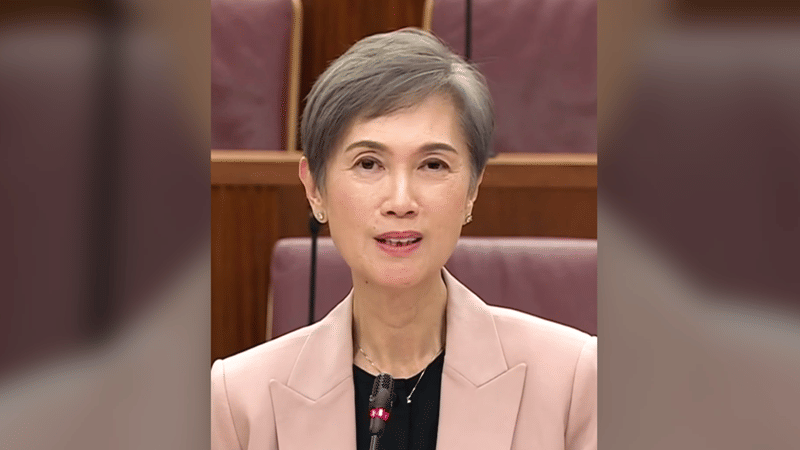
Under the new expansion, the programme will introduce sector-specific AI training tailored for professionals in fields such as legal, accounting and HR.
Singapore has unveiled an ambitious national push to future-proof its workforce, announcing plans to train 100,000 workers in artificial intelligence (AI) skills by 2029 under a newly launched National AI Impact Programme (NAIIP).
Speaking during the ministerial budget debate yesterday, Minister for Digital Development and Information Josephine Teo said the initiative will also support 10,000 enterprises over the next five years, positioning the city-state to remain competitive in an increasingly AI-driven global economy.
Building an AI-ready workforce
The NAIIP aims to help workers become “bilingual”, proficient in both their primary domain expertise and AI capabilities. “Not every citizen needs to be an AI engineer,” Minister Teo noted. “But they must be able to solve real-world problems using technology.”
She emphasised that combining AI know-how with sector-specific knowledge — and the “human touch” — creates a powerful professional advantage. The programme’s broader objective is to ensure that AI augments, rather than replaces, professional judgment.
TeSA expands beyond tech roles
To support this shift, the Infocomm Media Development Authority (IMDA) will expand its existing TechSkills Accelerator (TeSA) programme for the first time to target non-technical professions, including accountants, lawyers and receptionists.
Launched in 2016, TeSA has already helped more than 24,300 mid-career individuals transition into technical roles. Under the new expansion, the programme will introduce sector-specific AI training tailored for professionals in fields such as legal, accounting and human resources.
Specific AI fluency programmes for the accountancy and legal sectors will roll out in the first half of 2026. These will be developed in collaboration with the Institute of Singapore Chartered Accountants, the Singapore Academy of Law and the Singapore Corporate Counsel Association.
The training will equip accountants to use AI for financial reporting and compliance tasks, while lawyers will learn to apply the technology in research, document review and contract management. The overarching goal is to enable professionals to redesign work processes for greater efficiency and focus on higher-value advisory work.
According to a joint statement from the Ministry of Digital Development and Information and IMDA, these efforts will allow staff to shift from repetitive documentation to more strategic, complex tasks requiring human oversight.
Training modules will also address ethical considerations such as responsible AI use and data governance, reinforcing the need for professional judgment in areas like risk analysis and decision-making.
A ‘bilingual’ success story
Minister Teo cited the example of Geraldine Lau, a senior manager at KPMG, to illustrate the value of domain expertise combined with AI fluency.
In late 2024, Lau developed an AI agent to automate the extraction of regulatory announcements from the Singapore Exchange. The tool reduced the time required for audit risk assessments by half.
Although Lau does not possess advanced coding skills, her professional knowledge ensured the AI system identified the correct data points. The time saved has enabled her to focus on deeper risk assessments and professional calibration, a reminder, Minister Teo said, that human wisdom remains irreplaceable even as machines take over repetitive tasks.
Upgrading technical talent
Beyond non-technical professionals, the NAIIP also introduces a dedicated AI fluency programme for technical workers. The initiative aims to upgrade software engineers into full-stack professionals capable of managing complex systems and workflows through integrated AI agents.
Further details on training partners and application processes for the technical track are expected in the first half of 2026.
With the NAIIP, Singapore is signalling that AI adoption is no longer confined to technology teams. Instead, it is positioning AI literacy as a baseline capability across the economy, blending human expertise with machine intelligence to drive productivity, innovation and long-term competitiveness.
Author
Loading...
Loading...